|
|
 05-02-2010, 06:34 PM
|
#1
|
|
Member
Join Date: Apr 2010
Location: Pennsylvania
Posts: 48
SUN #1043
|
Backing up with sway control?
I am new here and new to trailers and have a question for all you experts. I am thinking of getting a weight distribution hitch of some kind and also some sway control of some kind. A friend of mine has a sway control friction bar on his hitch and he says he has to unhook that before backing up the trailer. Is this common? Sounds like a real pain to me! I am assuming that with the more expensive WD hitches with integrated sway control, unhooking it would not be necessary before backing up, but want to know for sure.
We have a T-1950, towed with a 2001 Dodge Durango. I haven't towed it much at all yet, but there is a good bit of sway and bouncing around. Folks tell me a WD hitch will take care of this. I'd be comfortable spending $300 or so on a hitch system but $500-600 is more than I am interested in spending right now.
__________________
__________________
Roy and DeAnn
2004 T-1950
2006 Nissan Armada LE
|

|

|
|
05-02-2010, 06:48 PM
|
#2
|
|
Senior Member
Join Date: Jun 2007
Location: New Hampshire
Posts: 1,025
SUN #292
|
We have a friction sway bar on our trailer and it works well. As a caveat I will say our Sunline weighs half of what your's weighs. I will also say that most people with larger trailers seem to have weight distribution systems.
When we back up to park we do not remove our sway bar nor do we lossen up the friction pad on the sway bar.
There's certainly no reason to remove a sway bar before backing up. If you feel the friction interfers with backing, you can simply go out and reduce the friction to zero by turning the arm that sets the friction level.
Removing a sway bar takes about 30 seconds, it's simply a matter of pulling two pins, no tools required.
I believe we paid less than $70 for our friction sway bar.
__________________
__________________
Norm and Ginny Milliard
1982 Sunline 15.5 SB
2004 Honda CRV 4 cyl, manual
|
|
|
|
|
05-02-2010, 07:31 PM
|
#3
|
|
Senior Member
Join Date: Apr 2007
Location: New York
Posts: 945
SUN #258
|
I tow a T-1950 with a F 150 and it tows like there's nothing back there using a WD and sway control. Once I forgot to tighten the sway bar and the first truck to pass me on the highway almost threw me off the road. I slowed down and pulled off the road when I could.
The WD will greatly reduce the bounce which if severe enough could lighten the vehicle weight in the front and you could lose some steering control while bouncing. If you were prone to sway at the same time you'd have a real problem. You have a separate brake control for just your camper for situations like that but we all hope we never need to use it.
The WD needs to be properly adjusted so ask for some help if you're not familiar with the process.
I wouldn't travel without having both systems. I do Loosen the sway bar before I back up because there is a lot of stress on the friction bar with a tight turn. That was recommended by the dealer. I takes me maybe 15 seconds to get out, loosen it and jump back in. There's no need to take it off but that would take maybe 30 seconds if I did so.
__________________
Paul & Sheri - Upstate New York - SUN-0258
Amateur Radio KD2KCY - VHF 146.520 MHz
2012 F150 F/X 4, 6cyl EcoBoost, Max Tow pkg
2013 Rockwood 8280WS 5th wheel
2006 Sunline Solaris T-1950
|
|
|
|
|
05-02-2010, 08:14 PM
|
#4
|
|
Senior Member
Join Date: Jan 2009
Location: Michigan
Posts: 234
SUN #778
|
Roy,
It may be worth noting that if your Durango is not a 4x4, loosening the WD bars will give you more traction by putting more weight on the rear wheels. That may be important if the ground is slippery, - as on wet grass.
Just a thought,
Roar
__________________
|
|
|
|
|
05-03-2010, 05:50 AM
|
#5
|
|
Senior Member
Join Date: Apr 2007
Location: New York
Posts: 1,846
SUN #264
|
Assuming that your Durango already has a Class IV receiver, I'd suggest you just purchase a WD system similar to this:

Basically, there is a adjustable ball platform, adjustable drawbar, two weight arms, and the clip-ups for the trailer's A-frame.
Install it, fine tune it, and use it for a while. Then decide if you need sway control.
All that "bouncing" you describe is due to the lack of weight distribution. You're adding all that tongue weight to the rear of the truck which unloads the front end and decreases steering control. The bouncing may be causing the sway.
If you buy the right ball platform, you can add a single friction sway control for a bit over $100 later.
Turning the lever a turn or two on the friction sway control before backing up isn't much of a pain.
There are a number of posts here in the Towing section that go into great detail about why one should have WD on a trailer as heavy as yours. They are pretty much essential reading and will help you decide which WD system to buy.
FWIW, if you live in or near a city, there are almost always WD systems for sale on Craigslist at very reasonable prices. If I was in the market for one, I'd look there first.
There are a whole bunch of safety reasons that one should have a WD system when towing. This affects not only the loved ones in your tow vehicle, but everyone on the highway as well.
__________________
'12 F250 4x4 Super Duty PowerStroke 6.7 diesel
2011 to present: '11 Cougar 326MKS
1999 to 2011: '99 Sunline T-2453
SUN264 * Amateur Radio kd2iat monitoring 146.52
|
|
|
|
|
05-03-2010, 10:21 AM
|
#6
|
|
Member
Join Date: Aug 2006
Posts: 86
SUN #10
|
I've heard of people bending sway bars when turning tight backing into a spot. I've never actually used one though.
I tow with a Pontiac Trans Sport van and I just use a Reese WD hitch. It makes a huge difference compared to nothing, and feels like a shock absorber between the vehicle and trailer. I've never had problems with sway with the little T-1661. I've driven in some pretty fierce winds with trucks blowing past me. It definitely rocks the trailer sometimes but doesn't get swaying.
|
|
|
|
|
05-03-2010, 02:08 PM
|
#7
|
|
Senior Member
Join Date: Jun 2007
Location: New Hampshire
Posts: 1,025
SUN #292
|
We haven't experienced much sway either.
When we first bought our trailer after towing a few hundred miles without issue. I posted questioning the necessity of a sway bar. Someone replied, true most of the time you don't need it but when that emergency occurs you'll be glad to have it and it doesn't cost much.
Recently, as I posted, we had a true emergency stop without issue, someone pulled across the road in front of us and stopped. Did the sway bar contribute to our successful stop? It's hard to know but the trailer never moved from a straight line.
I have also seen sway bar plates bend at the hitch. I believe this happens when the bar is over tightened. It's a friction bar and needs to slide not lock.
Certainly when we make a tight turn we hear the sway bar begrudgingly sliding but it's reassuring. If we're leaving a campground early in the morning I keep it loose until I reach the park exit - slip out the back jack.
This is our tenth year of retired RVing, traveling 7 months a year. I'm amazed by the number of people I've met recently that have rolled their trailers. In some measure driving an RV is like riding a motorcycle - the 'others' can sometimes create nasty situations.
Safe RVing,
__________________
Norm and Ginny Milliard
1982 Sunline 15.5 SB
2004 Honda CRV 4 cyl, manual
|
|
|
|
|
05-03-2010, 03:17 PM
|
#8
|
|
Member
Join Date: Aug 2006
Posts: 86
SUN #10
|
When we were in the UP, I had to do an emergency stop, going downhill. A guy was pulled over with his hunting dogs running all over the highway. I stopped very quickly, I'm sure the disc brakes had something to do with it. Hard to say how it would have gone with no brakes.
|
|
|
|
|
05-03-2010, 05:10 PM
|
#9
|
|
Member
Join Date: Apr 2010
Location: Pennsylvania
Posts: 48
SUN #1043
|
Thanks for all the help and advice. So I am gathering that it is necessary to loosen the sway control before backing up but it's not a big deal, so I am OK with that. Guess I won't be backing up all that much anyway. I drive tractor trailer for a living and spend a good bit of time every day backing up there. I can drive that truck fine. But this little trailer is a different animal... But properly equipped, all should be fine. Everyone I have talked to has recommended a WD hitch. And I am learning that it is not just for driving comfort but very much a safety issue as well. And likely less wear and tear on vehicles too I would think.
Next question... these hitches come with different weight ratings. I am not going to need a heavy duty one with this trailer. But, is there any problem with getting one that is heavier than necessary for this little trailer? They don't cost a lot more, and if at some time years down the road we get a bigger trailer, it could be used on it too.
The Durango is a 4X4, 5.9 L engine, factory towing package.
__________________
Roy and DeAnn
2004 T-1950
2006 Nissan Armada LE
|
|
|
|
|
05-03-2010, 05:23 PM
|
#10
|
|
Senior Member
Join Date: Jan 2009
Location: Michigan
Posts: 234
SUN #778
|
Roy,
Right or wrong, I ran 1200# bars for several years with an 18 ft. Dutchmen 180 without any issues that I know about.
I too anticipated a roomier coach some day, which we now have.
Wiser heads may jump in and tell us that was all wrong, but like I said, it worked without issues for us. In addition we had a friction sway brake. That worked well too on the 18 footer, but on our new to us T-2499, we have cam type sway control. The WD bars were already made to work with that set up.
Roar
__________________
|
|
|
|
|
05-03-2010, 05:25 PM
|
#11
|
|
Senior Member
Join Date: Apr 2007
Location: New York
Posts: 945
SUN #258
|
Just a note. The wheels on the 15 footers appear to be relatively further back than those of a heaver model. On the smaller units, the tongue weight will still be reasonable. The further back the wheels are, the less apt the unit is to sway.
On heavier models, there's a balance between wheel location and tongue weight so a sway bar becomes more necessary as the wheels move forward to keep the tongue weight within reason. A 5th wheel for example has the wheels much further toward the back with much more weight on the point of contact on the hitch in the bed than the back of the truck (tongue weight) could handle and sway control is not necessary, much like a tractor and trailer.
__________________
Paul & Sheri - Upstate New York - SUN-0258
Amateur Radio KD2KCY - VHF 146.520 MHz
2012 F150 F/X 4, 6cyl EcoBoost, Max Tow pkg
2013 Rockwood 8280WS 5th wheel
2006 Sunline Solaris T-1950
|
|
|
|
|
05-03-2010, 09:57 PM
|
#12
|
|
Moderator
Join Date: Nov 2006
Location: Ohio
Posts: 12,651
SUN #89
|
Hi Roy
Here are a few pics that may help explain some of this. There is a general rule to loosen the friction sway bar when backing up. And most times that is all one ever hears, no explanation, just don’t do it. Well I can tell you mechanically you can twist up a friction sway control going forward just as much as backwards. Here are a few reasons of how this happens.
The actual turn. See here. If this turn progresses, the bar is going to bend. It does not matter if you are going forward or backwards and it does not matter if it is tight or loose.
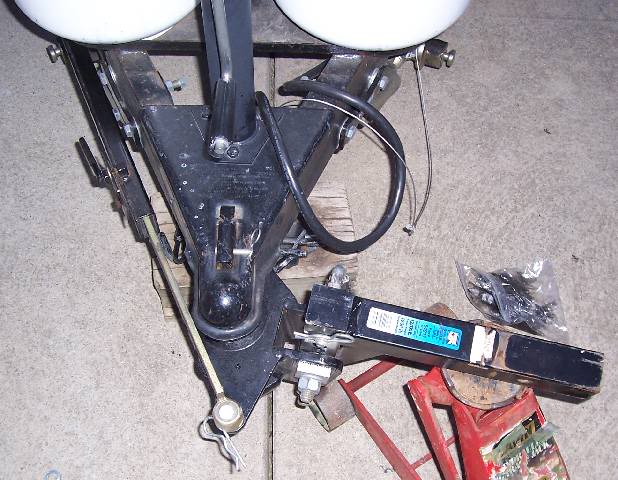
And in this turn the little ball mount will crash the frame even if the friction bar is removed.
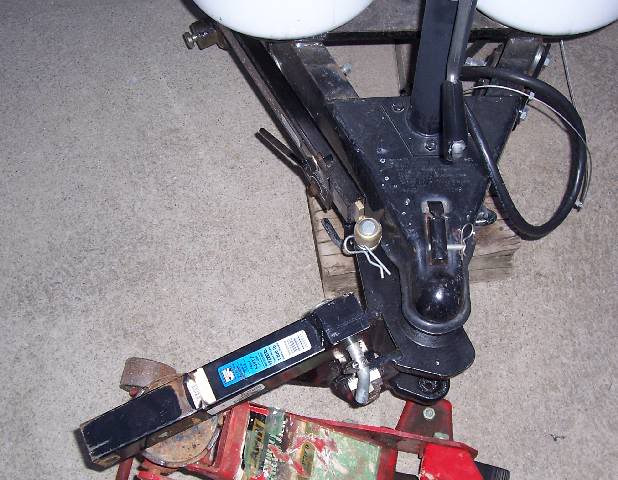
So yes, if you exceed the mechanical limits before a total jack knife, something in the hitch has to give. The best way to know this is to slowly with a spotter back up into almost jack knife and STOP, then get out and look. Now get a metal image planted in your head what the TT looks like in the rear view mirror. And don’t go that far.
Back up it is often times easier to back close to jackknife and thus bend the friction sway bar.
The other possible bending of the bar when backing is when it is very tightly set. You back up quick in a direction of turn that can buckle the bar. It would be like this with a fast return to the left. If the bar is set so tight to control and out of balance TT, the bar can grab and buckle instead of slide.
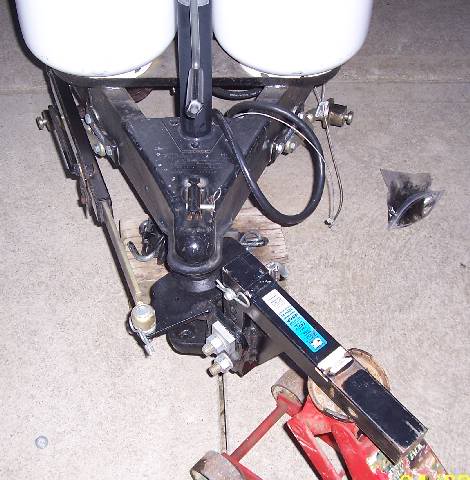
Those are the most common ways folks bend these bars. I’m sure someone has found a few other ways…. And dealers like to say, NEVER back up with the bar on rather then explain what the heck is going on. DW yelled at me several times when we had the Pop Up. Dealer said NEVER back up with the bar on. Well….. after enough of that I showed and explained to her what the guy was talking about.
You mentioned lost cost hitch and you mentioned being about to upgrade. Well 1 at a time. I do not have an actual T1950 loaded tongue weight but a 2005 T1950 has a dry tongue at 380#. So I’m guess-ta-mating it might end up with in the 500 to maybe 550# loaded weight range.
Lowest cost. Here is a Reese 600# round bar hitch. I myself would not buy this style round bar hitch head but it is lowest cost. You need to add a ~ $20 tow ball and a ~ 100 shank to make a complete hitch. Then add on a ~60 to $100 friction sway bar.
http://www.etrailer.com/Weight-Distr...ese/66065.html
Or you can go with this one. This hitch head I would recommend. A 600# trunnion WD hitch. And You need to add a ~ $20 tow ball and a ~ $100 shank to make a complete hitch. Then add on a ~60 to $100 friction sway bar.
http://www.etrailer.com/Weight-Distr...ese/66020.html
Seams they have a package deal with a shank now cheaper too. Still need a ball and friction bar.
http://www.etrailer.com/Weight-Distr...ese/66540.html
Or you can upgrade to the 800# one like this for the same money
http://www.etrailer.com/Weight-Distr...ese/66021.html
And I see they have a 800# packaged with a shank for less then the above separate.
http://www.etrailer.com/Weight-Distr...ese/66541.html
Those trunnion WD hitches are made from 1,700# hitch components. The trunnion hitched head is good to 1,700# so is the snap up brackets. You just upgrade the WD bars and the hitch shank if you want to tow a large TT like mine. You can then add a DC later in life on a bigger TT.
And there is this option now. It has sway control built in the WD hitch. No need for a friction sway bar.
The Reese SC 600# hitch. Still need a $100 shank, $20 ball but no friction sway bar.
http://www.etrailer.com/Weight-Distr...ese/66152.html
Or an 800 # system with shank. Same price as the 600# and adding a shank
http://www.etrailer.com/Weight-Distr...ese/66153.html
Those SC hitch can be upgraded in the future by just buying heavier WD bars and still use the same hitch head and friction brackets.
Now how big (strong) a WD hitch is too big. Well it depends. There is not a hard fast rule that 1 size fits all.
Ride, For the best ride, the WD bars are the same as the loaded tongue weight. So 600# bars on a 600# loaded tongue is strong enough and soft as it is going to be.
Adding 800# bars on a 600# tongue adds a small level of stiffness.
Adding 1,200# bars on a 600# tongue adds more stiffness and some caution pending your TT and your TV. If your Durango truck receiver is only rated at 750# loaded tongue weight in WD mode, using 1,200# WD bars may bend the receiver pin box given the right towing situation. And if you TT has a 3” thin frame, it may bend it. In your case check the T1950. I think it may have 4” channel iron A frame. But also check your truck receiver ratings. I know 1,200# bars work on a 750# tongue but the truck was also a 2500 and had everything built to handle the heavy bars. The ride was OK as the back of my truck was stiff to start with. However on a 1500 truck I would caution using 1,200# WD bars if your receiver is only good to 750 or 800#.
Buying a heavy components and then de-rating it with lighter WD bars allows it to be used later on and not have to rebuy the entire hitch just the WD bars.
Hope this helps
John
PS I do not know if you can buy a complete WD hitch, tow ball, shank and friction sway bar that is upgradable for less then ~$300 However here is something that comes close. It is an EAZ lift. A basic WD hitch with a friction sway control. It has the round bar setup but at least this one you can tilt the head more then the Reese round bar.
http://www.pplmotorhomes.com/parts/r...h-eaz-lift.htm
They have a 1,000# wd bar system on sale now with everything in it. Shank, tow ball and friction bar. BUT it is a 1,000# system. Back to what is your receiver rating? They also have a 750# with shank but you have to by the ball and sway bar.
__________________
Current Sunlines: 2004 T310SR, 2004 T1950, 2004 T2475, 2007 T2499, 2004 T317SR
Prior Sunlines: 2004 T2499 - Fern Blue
2005 Ford F350 Lariat, 6.8L V10 W/ 4.10 rear axle, CC, Short Bed, SRW. Reese HP trunnion bar hitch W/ HP DC
 Google Custom Search For Sunline Owners Club
|
|
|
|
|
05-04-2010, 06:18 AM
|
#13
|
|
Senior Member
Join Date: Jun 2007
Location: New Hampshire
Posts: 1,025
SUN #292
|
John,
Interesting pictures. It made me think about why I have never had a problem.
I never loosen my sway bar when backing up and certainly never remove it. In a full year of travel I park my rig as many times as most people park a rig in their lifetime.
Maybe it's because I have a short trailer, but my car never gets to a position that's ever near 90 degrees when backing. In most parking situations I can back it in with a relatively smooth continuous motion.
My tendency if I'm in tight quarters is to park in in steps - back a little than forward a little and than back again.
After seeing your pictures I'm now certain I'll never get near 90 degrees.
I have never seen a bent bar, just a bent hitch mounting plate because the friction level was set so high that it actually behaved like a locked beam.
Thanks for the great pictures they show the potential for a problem and suggest a solution.
__________________
Norm and Ginny Milliard
1982 Sunline 15.5 SB
2004 Honda CRV 4 cyl, manual
|
|
|
|
|
05-04-2010, 04:37 PM
|
#14
|
|
Member
Join Date: Apr 2010
Location: Pennsylvania
Posts: 48
SUN #1043
|
Wow, thanks guys. You're a big help! These Reese SC systems look interesting to me. Sway control built in, so I wouldn't have to mess around with the friction sway bar. And looks like it wouldn't cost much more for this system than to have a regular WD hitch with the sway control bar added. Anybody out there using the SC systems? What do you think of them? Are they relatively new? Maybe this system solves the problem of bent friction bars.
__________________
Roy and DeAnn
2004 T-1950
2006 Nissan Armada LE
|
|
|
|
|
05-04-2010, 08:51 PM
|
#15
|
|
Moderator
Join Date: Nov 2006
Location: Ohio
Posts: 12,651
SUN #89
|
Roy
I have not had one of the Reese SC hitches but have helped folks set them up. Here is the 1st generation installed on a TT.
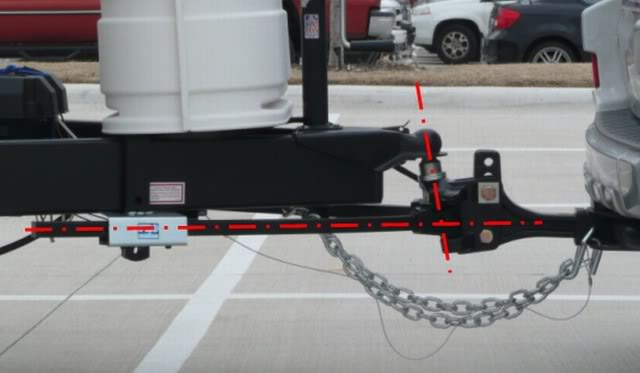
I do caution you to "not" buy the 1st generation but to get the current 2nd generation.
The first generation used a special hitch head that did not have much trunnion socket tilt in it as was cast in. That created a situation where you cannot adjust the hitch as much as you want/need.
The newest SC series uses the same hitch head as the High Performance trunnion bar hitch like I have. The WD bars go in at an angle to the head and then you can tilt the head a great distance to get proper WD on the truck. And that overcame the problem on the 1st generation.
This SC hitch is many times more effective then the friction sway bar in resisting the effects of sway. It does so by having the ability to put greater force on the friction pads then you can get with the sway bar.
If you get to the point of wanting one, let me know what Reese hitch PN you are looking at and I can confirm if it is the 1st or 2nd generation. There are still a qty of brand new 1st generations one out there for sale. And the 1st generations ones are not a bad hitch, just if one knows you can buy the better one that has more adjustment options.
Since your considering an all in one hitch, there is another very good brand out there. Equal-I-zer. I did not list it last night as you said you only wanted to pay no more then $300 but here it is in case you change your mind.
http://www.equalizerhitch.com/
http://www.rvwholesalers.com/catalog...ailer-hitches/
They are often priced with a shank but you need a tow ball too.
The Equal-I-zer is a very good hitch and is most likely a step above the Reese SC system hitch in effectiveness of sway control.
All of these hitches have pro’s can con’s and some fit certain TT/TV combinations better then others. The hard part is sorting out the marketing hype and knowing what to look for. Here SOC can help and the most important thing is, know the hitch and how to adjust it correctly to make it work the best it can be.
Hope this helps and good luck
John
__________________
Current Sunlines: 2004 T310SR, 2004 T1950, 2004 T2475, 2007 T2499, 2004 T317SR
Prior Sunlines: 2004 T2499 - Fern Blue
2005 Ford F350 Lariat, 6.8L V10 W/ 4.10 rear axle, CC, Short Bed, SRW. Reese HP trunnion bar hitch W/ HP DC
Google Custom Search For Sunline Owners Club
|
|
|
|
|
05-08-2010, 02:43 PM
|
#16
|
|
Member
Join Date: Apr 2010
Location: Pennsylvania
Posts: 48
SUN #1043
|
Thanks again for your help! A friend of mine has an Equal-i-zer he is going to sell, since he got a bigger trailer and needs a bigger hitch. So I am in negotiations with him. But I may go with the Reese SC system, don't know yet. And I will want the 2nd generation like you mentioned so will make sure of that. I may have more questions... Thanks, Roy
__________________
Roy and DeAnn
2004 T-1950
2006 Nissan Armada LE
|
|
|
|
|
05-08-2010, 05:43 PM
|
#17
|
|
Member
Join Date: Apr 2010
Location: Pennsylvania
Posts: 48
SUN #1043
|
John, I am looking at Reese 66151. Is it 1st or 2nd generation? Thanks.
__________________
Roy and DeAnn
2004 T-1950
2006 Nissan Armada LE
|
|
|
|
|
05-08-2010, 09:14 PM
|
#18
|
|
Moderator
Join Date: Nov 2006
Location: Ohio
Posts: 12,651
SUN #89
|
Quote:
|
Originally Posted by LanCoPA
John, I am looking at Reese 66151. Is it 1st or 2nd generation? Thanks.
|
Hi
Yes if they are selling Reese PN 66151 that is a 2009 part number and newer 2nd gen hitch. A 600# WD bars SC hitch with shank that contains hitch head Reese PN 58167. The head is the key thing.
In 2009 they discontinued SC hitches Part number 49578, 49579 and 49580. Those SC hitches used a different hitch head and that was where the adjusting problem came in given some TT A frame configurations. The hitch still worked good just you could not adjust it enough given the wrong conditions.
If this is the one you are looking at from Etrailer, http://www.etrailer.com/Weight-Distr...ese/66151.html Yes that 66151 is the new one. I have bought from them many times and had positive experiences. And shipping is generally free or $0.99 if over $150 purchase.
Here are the instructions for it.
http://www.reeseproducts.com/fitguides/pdf/N66151.pdf
Good luck
John
__________________
Current Sunlines: 2004 T310SR, 2004 T1950, 2004 T2475, 2007 T2499, 2004 T317SR
Prior Sunlines: 2004 T2499 - Fern Blue
2005 Ford F350 Lariat, 6.8L V10 W/ 4.10 rear axle, CC, Short Bed, SRW. Reese HP trunnion bar hitch W/ HP DC
Google Custom Search For Sunline Owners Club
|
|
|
|
|
05-15-2010, 04:02 PM
|
#19
|
|
Senior Member
Join Date: Aug 2007
Location: New York
Posts: 404
SUN #385
|
Yes, Etrailer is a great place to get towing needs at a very good price. I have also had very satisfactory experiences with them.
__________________
 Rick
2007 Ford F150 FX4 Supercab 4x4, 5.4 FFV engine, 3.73LS.
|
|
|
|
|
07-14-2010, 07:28 AM
|
#20
|
|
Junior Member
Join Date: Jun 2010
Posts: 23
SUN #1130
|
I also have a 2001 Durango mine is not 4x4 my brother tows campers all the time and he says to turn off the overdrive its easier to control is this true? also I have a T-1550 size camper the previous owner left the receiver and anti-sway bar in it I haven't used it yet seems to tow fine I haven't had it on any main highways yet so I'm thinking I may need to use it my concern is settings I'm a little nervous about that what do I do?
__________________
__________________
Steve Cano 
Chicago IL.
1983 T-1550
2001 Dodge Durango
|
|
|
|
|
|
|
Currently Active Users Viewing This Thread: 2 (0 members and 2 guests)
|
|
|
 Posting Rules
|
You may not post new threads
You may not post replies
You may not post attachments
You may not edit your posts
HTML code is Off
|
|
|
|
 » Recent Sunline Discussions
 |
|
|
|
|
|
|
|
|
|
|
|
|
|
|
|
|
|
|
|
|
|
|
|
|
|













 Linear Mode